
AI Value Creation
Realize AI Value Faster, from Promising Pilots to Results at Enterprise Scale
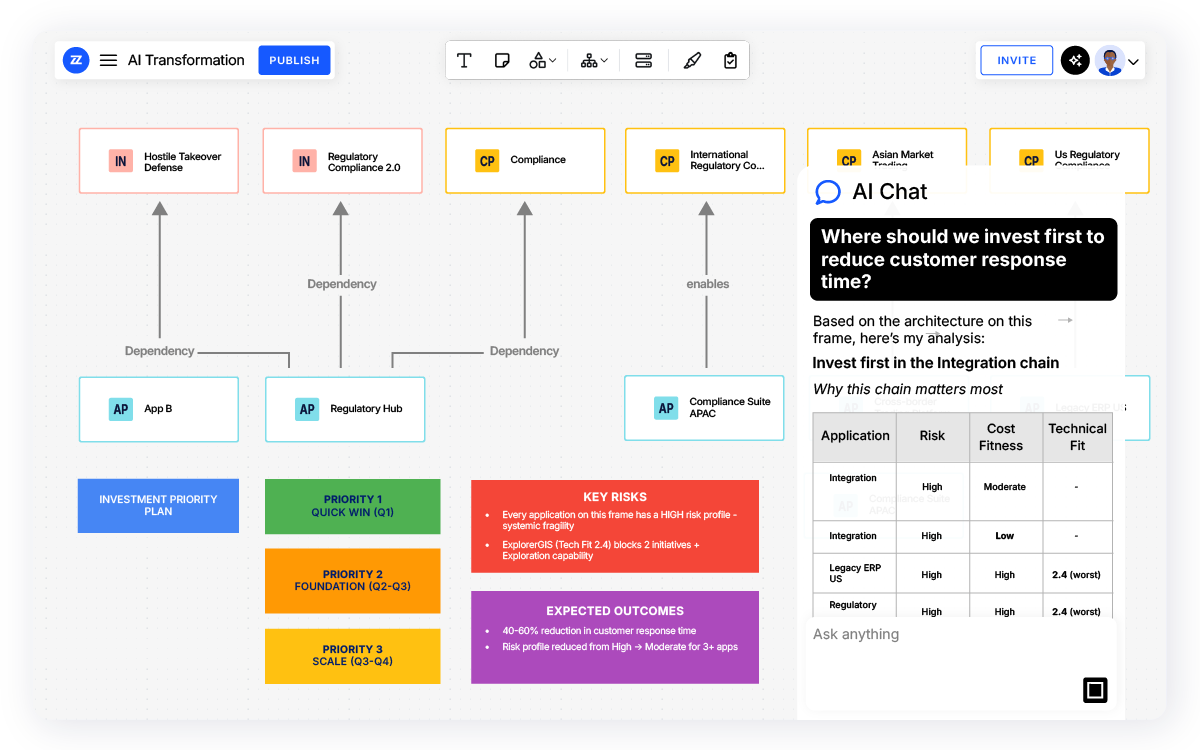
Turn AI Investment into Measurable Business Outcomes
As AI investment grows, pressure is rising to demonstrate business impact. Organizations need to identify worthwhile opportunities, prioritize funding, and coordinate the changes required to deliver results at scale. Bizzdesign helps you connect AI initiatives to business goals, capabilities, dependencies, and performance measures so you can:
- Focus AI investment on opportunities with the greatest strategic and business value.
- Translate isolated AI gains into better performance across the business.
- Realize benefits sooner by addressing capability gaps and dependencies.
- Protect expected benefits by spotting emerging performance gaps early.
AI Use Case Identification
Maximize AI Value by Focusing on What Matters Most
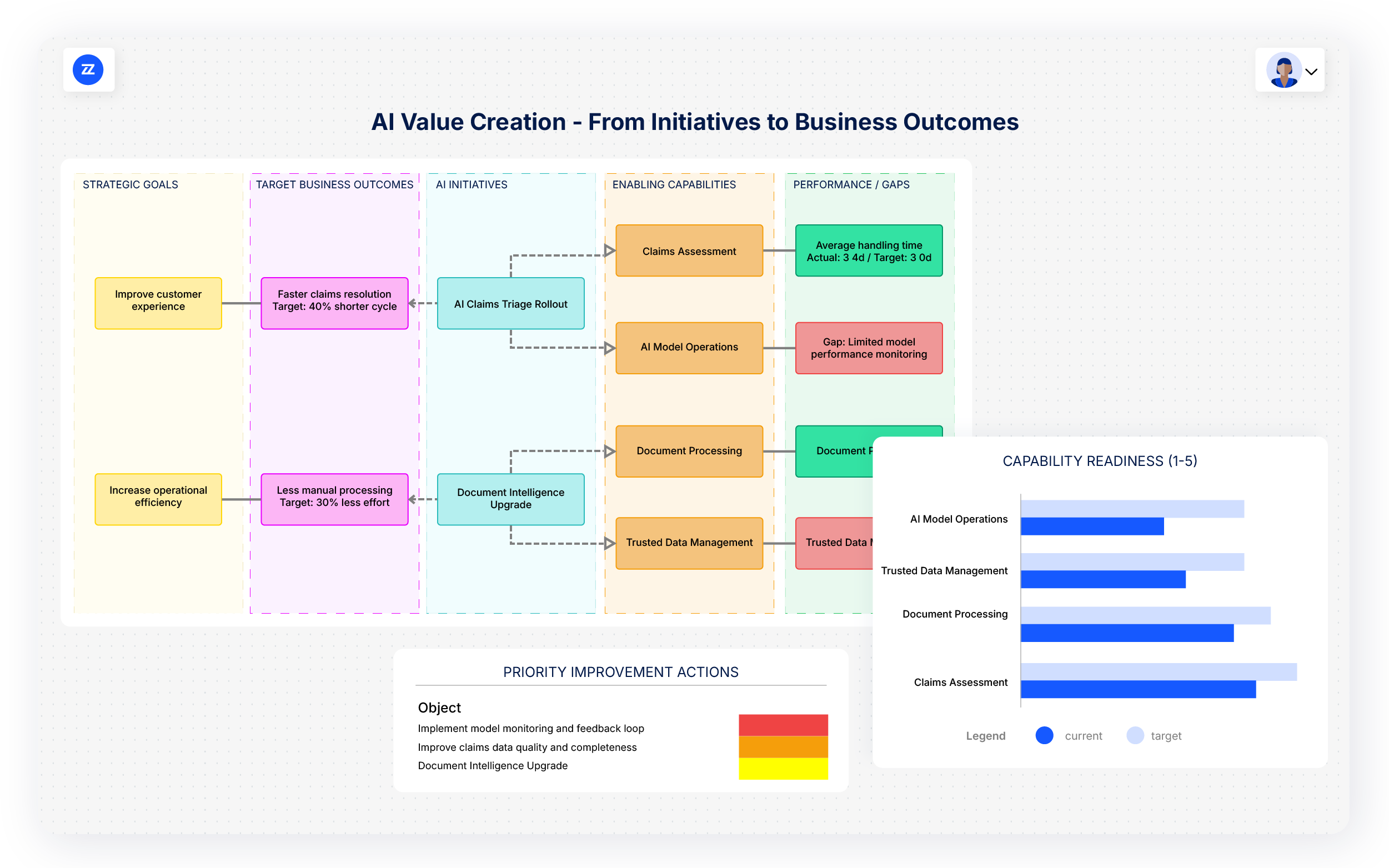
With Bizzdesign, teams can map AI initiatives to business goals and capabilities. These relationships help teams identify opportunities aligned with strategic priorities and targeted business outcomes, while revealing overlap with work already planned.
- Keep AI efforts aligned with strategy by linking initiatives to business goals and capabilities.
- Focus AI where it can improve customer experience, operational performance, or resilience.
- Free up delivery capacity by combining AI initiatives that duplicate effort.
AI Investment Prioritization
Make Your AI Budget Deliver Greater Business Value
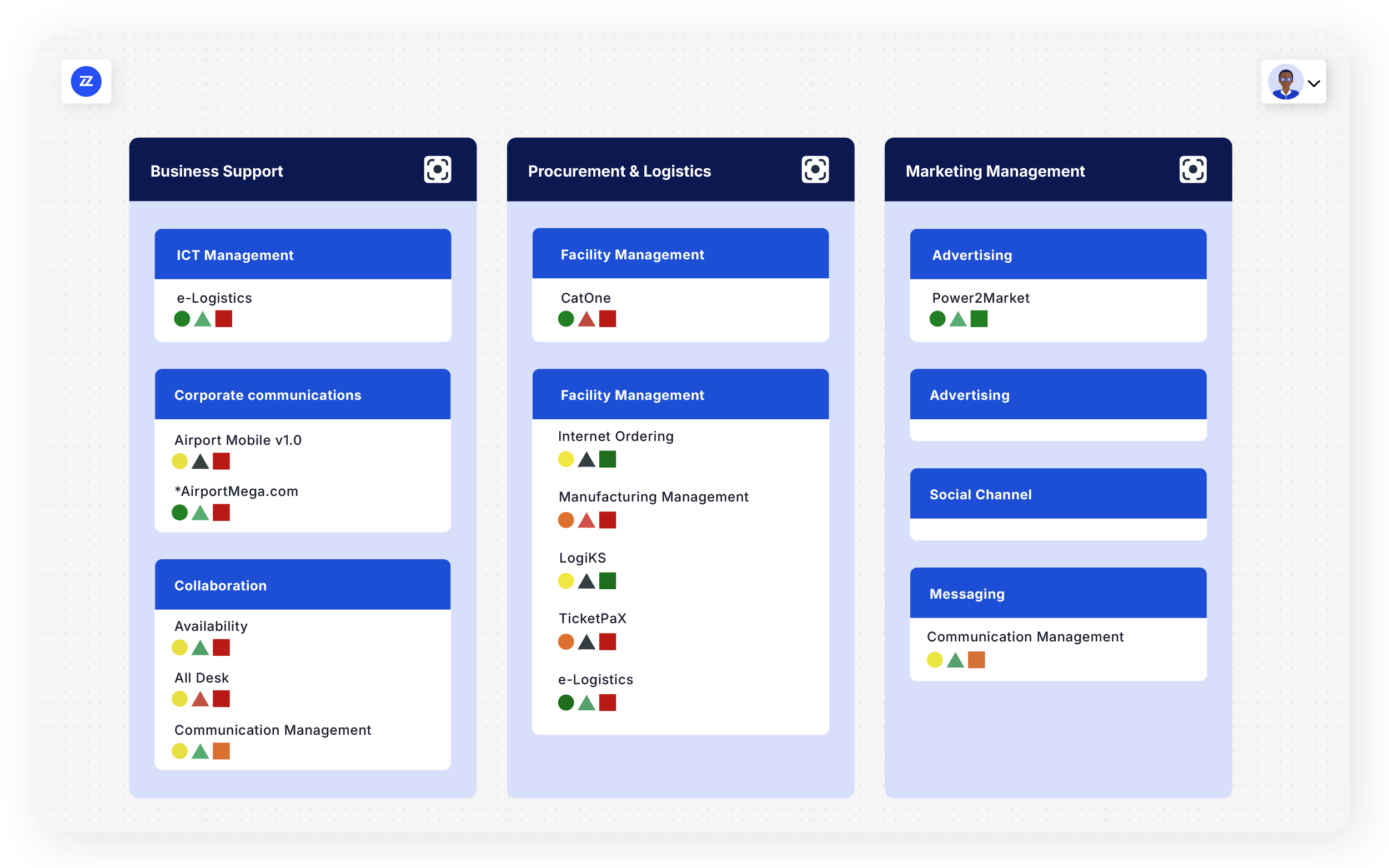
With Bizzdesign, teams can assess and prioritize AI initiatives using strategic fit, expected benefits, pilot results, projected costs, and readiness to scale. Visibility into gaps, overinvestment, bottlenecks, and dependencies helps teams scale what works and redirect investment when needed.
- Resolve competing AI priorities by comparing initiatives for strategic fit and expected benefits.
- Avoid costly false starts by weighing feasibility, dependencies, and risk against potential returns.
- Make better use of limited resources by deciding which AI initiatives to fund, scale, or stop.
Benefits Realization Management
Close the Gap Between Expected and Realized AI Benefits
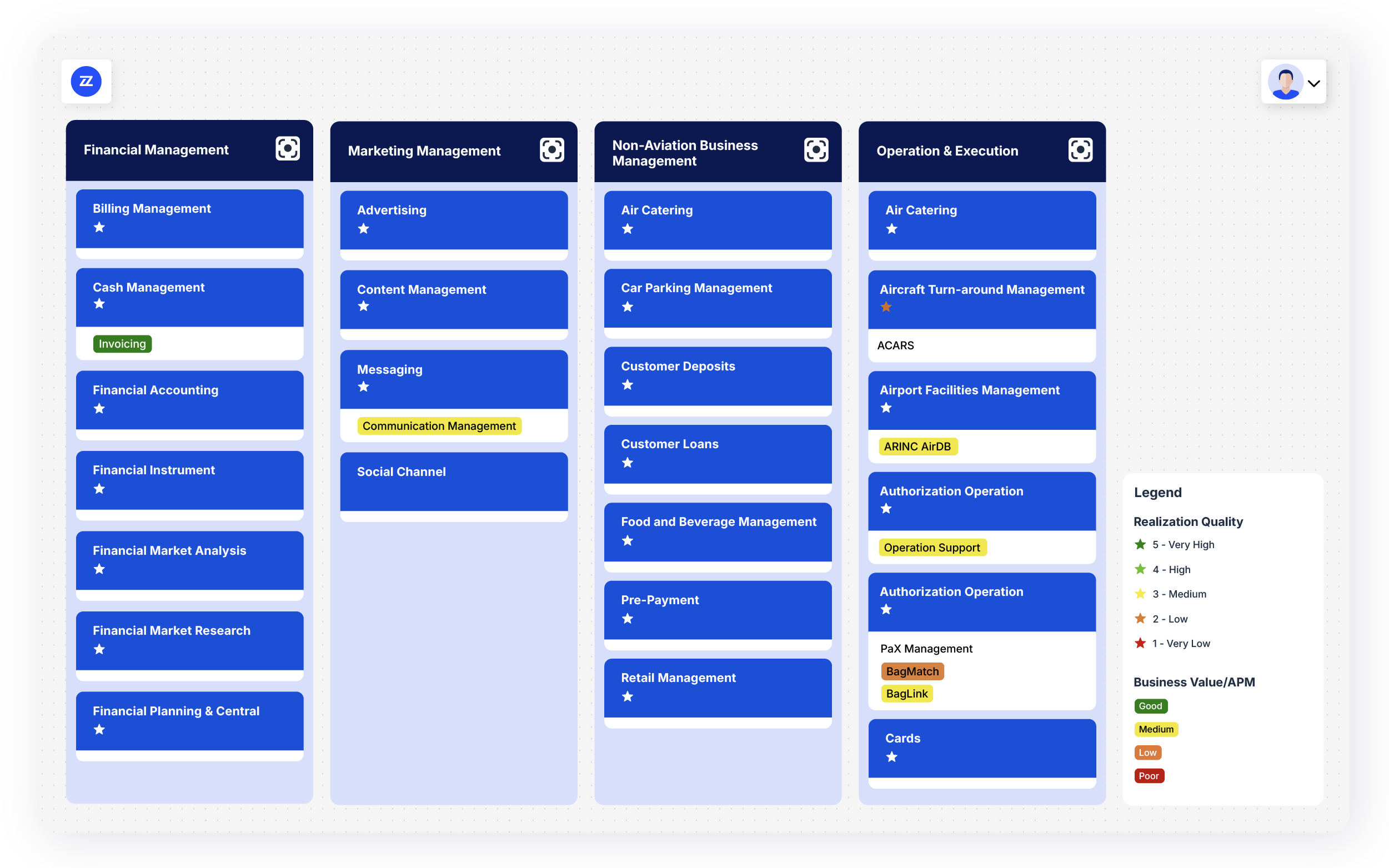
With Bizzdesign, teams can coordinate roadmaps across domains, initiatives, business units, and geographies while accounting for dependencies and constraints. Linking business outcomes to performance measures helps teams assess whether AI benefits are materializing as adoption expands.
- Improve end-to-end results by finding bottlenecks that could limit the benefits of AI.
- Accelerate value across initiatives by coordinating shared data and technology improvements.
- Make AI progress visible by linking performance measures to the business outcomes you expect.
A Track Record in Delivering Business Value
“Bizzdesign enables clear visualization of how each initiative contributes to the overall strategy, making it easy to explain and align with stakeholders.”
“Bizzdesign enables us to prioritize investments and pass financial benefits on to our members. We are all about maintaining an ecosystem where everyone thrives. Bizzdesign is key to this.”




FAQs
AI can help businesses increase revenue, improve service, reduce costs, or strengthen resilience when it addresses a specific business need. Identifying that contribution requires connecting the desired improvement to the processes and capabilities that influence it. For example, improving customer retention may depend on resolving service issues more effectively, while reducing operating costs may depend on eliminating process bottlenecks. Bizzdesign helps teams explore those opportunities through business architecture management, linking strategic goals to the customer journeys, value streams, and capabilities that support them. Teams can then identify where AI could make a meaningful difference and define the business result an initiative should deliver.
Choosing the right AI projects means comparing the business benefits each opportunity could deliver with the cost, risk, and effort required. Using consistent criteria helps teams assess competing proposals, including whether the necessary data, technology, and skills are available. Through strategic portfolio management, Bizzdesign gives teams a common basis for evaluating proposals by connecting proposed initiatives to business priorities, expected benefits, and delivery dependencies. Teams can compare opportunities with a clearer understanding of what each would require and which existing commitments it could displace, helping them resolve competing priorities before committing resources.
An AI business case should explain the problem being addressed, the expected improvement, the full cost of delivery and operation, and how success will be assessed. A credible case also identifies the assumptions and dependencies that could change the expected return, such as data preparation, integration, training, and ongoing model usage. Bizzdesign helps teams assemble the business and technology evidence to support that case by connecting initiatives to strategic objectives, business capabilities, costs, benefits, and technology dependencies through strategic portfolio management and application portfolio management. Those details help teams substantiate the investment request and give decision-makers a clearer basis for approving funding or requesting further evidence.
The appropriate AI budget depends on the opportunities your business can realistically deliver, the benefits expected, and the other commitments competing for funding. A useful allocation therefore accounts for both AI initiatives and the data, infrastructure, or application improvements needed to make them viable. With strategic portfolio management, Bizzdesign helps teams weigh those funding demands by assessing proposed AI investments alongside active and planned technology initiatives. Comparing their strategic contribution, costs, and dependencies makes funding trade-offs explicit, helping leaders allocate resources without overlooking essential commitments or the foundations AI projects need.
A successful AI pilot provides a basis for wider deployment if the expected benefits remain worthwhile at higher usage levels and the organization is ready to support expansion. To judge whether the demonstrated benefits can extend beyond the pilot, teams need to compare measured outcomes with the operating costs, integration requirements, available skills, and process changes required for wider use. To assess the financial and operational implications together, Bizzdesign connects investment planning with enterprise architecture to link proposed expansion with the systems, capabilities, and initiatives it depends on. Understanding these dependencies helps teams establish what redesigning work and operations for AI would involve and include the necessary changes in rollout plans. Teams can then weigh pilot evidence against the additional investment and delivery requirements, deciding whether to expand now, proceed in stages, or address readiness gaps first.
Getting more value from AI can require changes to processes, data, technology, skills, and working practices. The changes that matter depend on the intended outcome: faster AI-assisted decisions, for example, may achieve little if missing information or downstream approvals still delay the work. Bizzdesign helps teams identify such constraints by assessing the capabilities required for the outcome against what the organization can deliver today. Through capability-based planning, teams can plan how to close the identified gaps across people, processes, information, and technology, including redesigning work and operations for AI where roles, workflows, or systems need to change. Where several AI initiatives depend on the same capability, coordinating the supporting changes across teams helps ensure that shared improvements are available when each initiative needs them.
Time saved with AI produces financial savings when it reduces expenditure, such as overtime or external service costs. If employees use the time to handle more work or improve service, the benefit is additional capacity or better performance, which should be measured separately from cash savings. Understanding how saved time affects the wider workflow helps identify which benefit is achievable. Bizzdesign supports this workflow analysis through business process management, helping teams examine activities, handoffs, and bottlenecks. Teams can then identify where work needs to change for saved time to reduce expenditure or increase capacity.
AI project ROI is calculated by subtracting total project costs from financial benefits attributable to AI, dividing the result by total costs, and multiplying by 100. Benefits and costs should cover the same period, with costs including implementation, integration, training, operation, and model usage. Time saved should count as a cost saving only when it reduces expenditure; additional capacity and service improvements should be tracked separately unless their financial contribution can be substantiated. Comparing performance before and after deployment, while accounting for other business changes, helps establish which benefits are attributable to AI. Bizzdesign helps teams assess whether those benefits meet expectations by tracking project costs and benefits against the business case through strategic portfolio management. Using costs and benefits validated by finance, teams can determine whether any shortfall in ROI comes from higher spending, lower benefits, or both.
The time needed to see a return on AI investment depends on the implementation effort, adoption, operating costs, and business changes required to generate benefits. Early improvements in speed or quality may appear before cumulative financial benefits exceed costs. A realistic timeline therefore needs milestones for both delivery and business performance. Bizzdesign helps teams define and track delivery milestones through strategic portfolio management, linking initiatives and roadmaps to required capabilities and dependencies. Those connections help teams identify prerequisites, such as data integration or process changes, and align delivery schedules so dependent initiatives are not held up by unfinished work. Teams can then address avoidable delays and revise the expected timing of returns when delivery plans change.
Yes. Financial analysis and reporting tools can compare AI costs with financial benefits, while operational analytics can provide evidence of changes in productivity, quality, or service. To assess whether an AI project is delivering the expected value, buyers also need to connect financial and operational measures to the business goals and processes the project is intended to improve. Bizzdesign helps connect projects, goals, and operational performance through business architecture management, business process management, and strategic portfolio management. By connecting goals, initiatives, capabilities, and process performance measures, teams can assess whether expected improvements are materializing and identify where further changes are needed to realize value.

Discover what it takes to turn your AI investment into measurable business gains.